Packing Light for a Three-Day City Break
Packing for a short city trip is often harder than packing for a longer one. Three days feels brief enough to justify a small bag, but long enough to tempt you into adding backup shoes, extra layers, and several outfits “just in case.” The easiest way to keep things light is to decide what the trip actually requires before opening the suitcase.
For most city breaks, the essentials are simple: comfortable walking clothes, one slightly smarter option, weather protection, basic toiletries, and enough space to bring the bag home without wrestling with the zipper.
Choose the bag before the clothes
A compact carry-on or small suitcase creates a useful limit. If you start with a large case, empty space tends to attract unnecessary items. A smaller bag encourages each piece to earn its place and makes stairs, trains, hotel corridors, and public transport much easier.
Leave a little room rather than packing the case perfectly full. That space is useful for a book, a local food purchase, or simply repacking in a hurry on the final morning.
Build around one color family
You do not need a formal capsule wardrobe, but choosing clothes that work together reduces the number of pieces required. Two bottoms, three tops, and one outer layer can cover most combinations for a three-day trip. Neutral or related colors make it easier to change the look without adding more clothes.
If one dinner, concert, or restaurant needs a neater outfit, choose a piece that can still be worn during the day with different shoes or a layer. Clothing that only works for one hour of the trip is usually the first thing to reconsider.
Wear the bulkiest pieces in transit
The heavier shoes, jacket, and thickest knit usually belong on you rather than in the suitcase. This saves space and also means the most weather-resistant items are available as soon as you arrive.
For footwear, one comfortable pair is often enough if it suits both walking and casual evenings. A second pair makes sense when weather or a specific activity genuinely calls for it, but it is worth remembering how much space shoes consume compared with clothing.
Pack by function, not by day
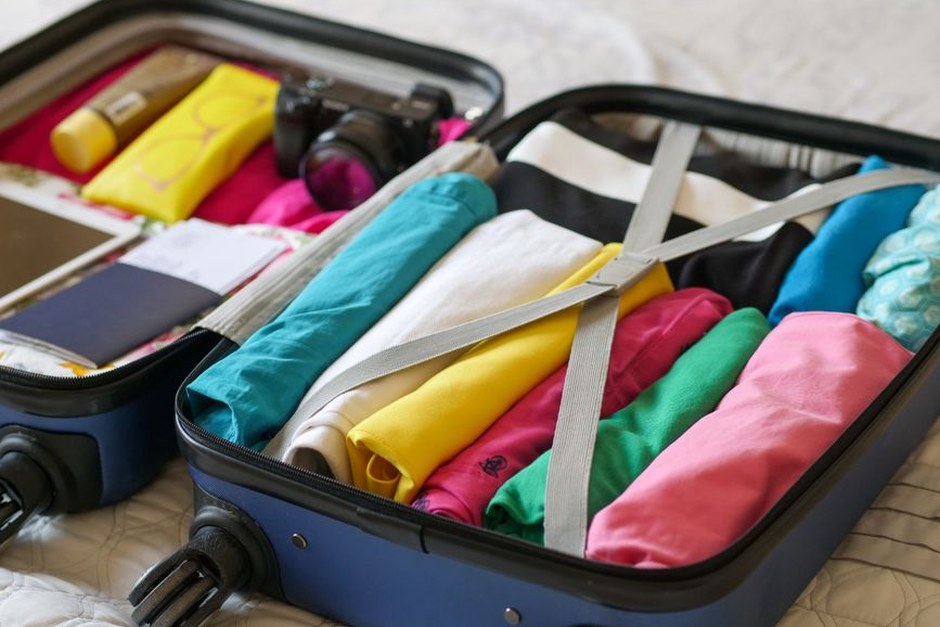
Instead of making three separate outfit piles, group items by purpose: tops together, underwear together, electronics in one pouch, toiletries in another. This makes the bag easier to use in a small hotel room and reduces the chance of unpacking everything to find one cable.
Rolling or folding both work; consistency matters more than method. The useful trick is simply keeping the categories visible so the case does not become a stack of overlapping objects.
Keep the first hour accessible
Put the things you may need immediately near the top: a light layer, charger, sunglasses, transit card, or small umbrella. If you are arriving before hotel check-in, add whatever lets you comfortably spend a few hours walking around without opening the whole bag.
The best light-packing rule is not to remove things for the sake of minimalism. It is to remove the items that duplicate another item’s job. A short city trip becomes easier when the luggage can move with you, fit into small spaces, and be repacked without effort. That convenience is usually worth far more than a fourth pair of trousers.